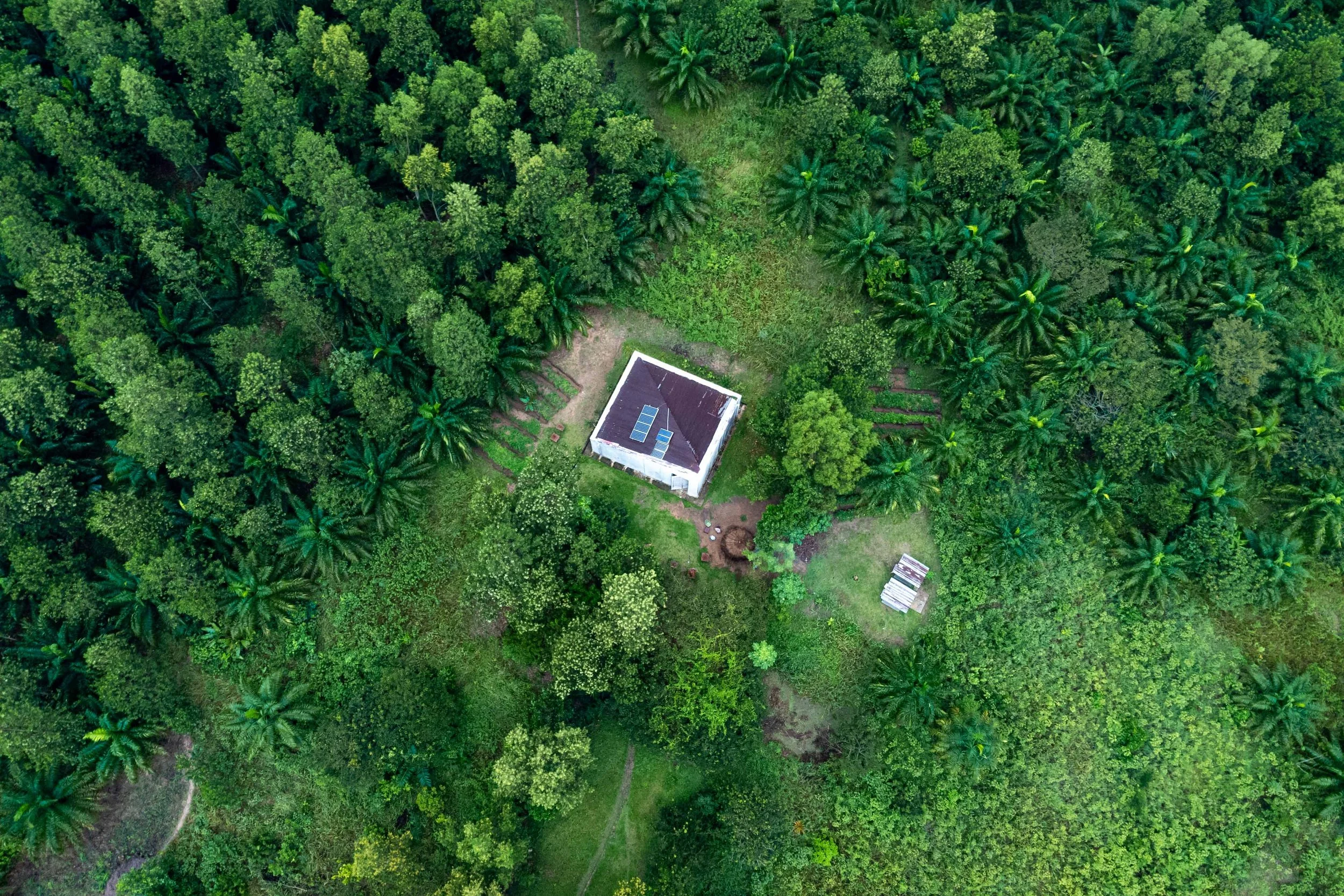
Aerial view of the White Cube Museum, surrounded by regenerated forest. Lusanga, Democratic Republic of the Congo, February 2025.
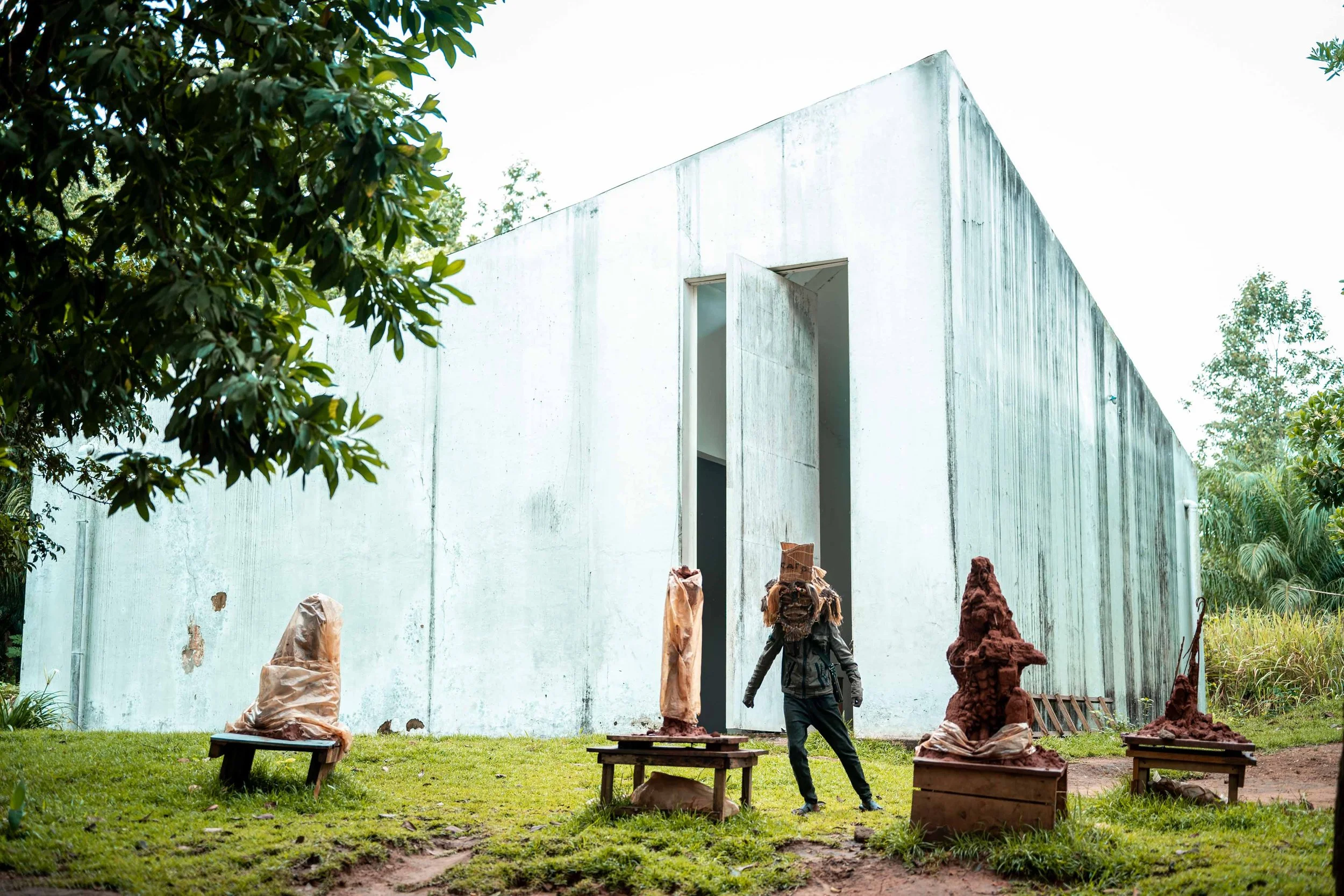
Artist and performer Daniel Mufunzi wears the Mbunya mask, a symbol of power, in front of the White Cube Museum. Lusanga, Democratic Republic of the Congo, February 2025.
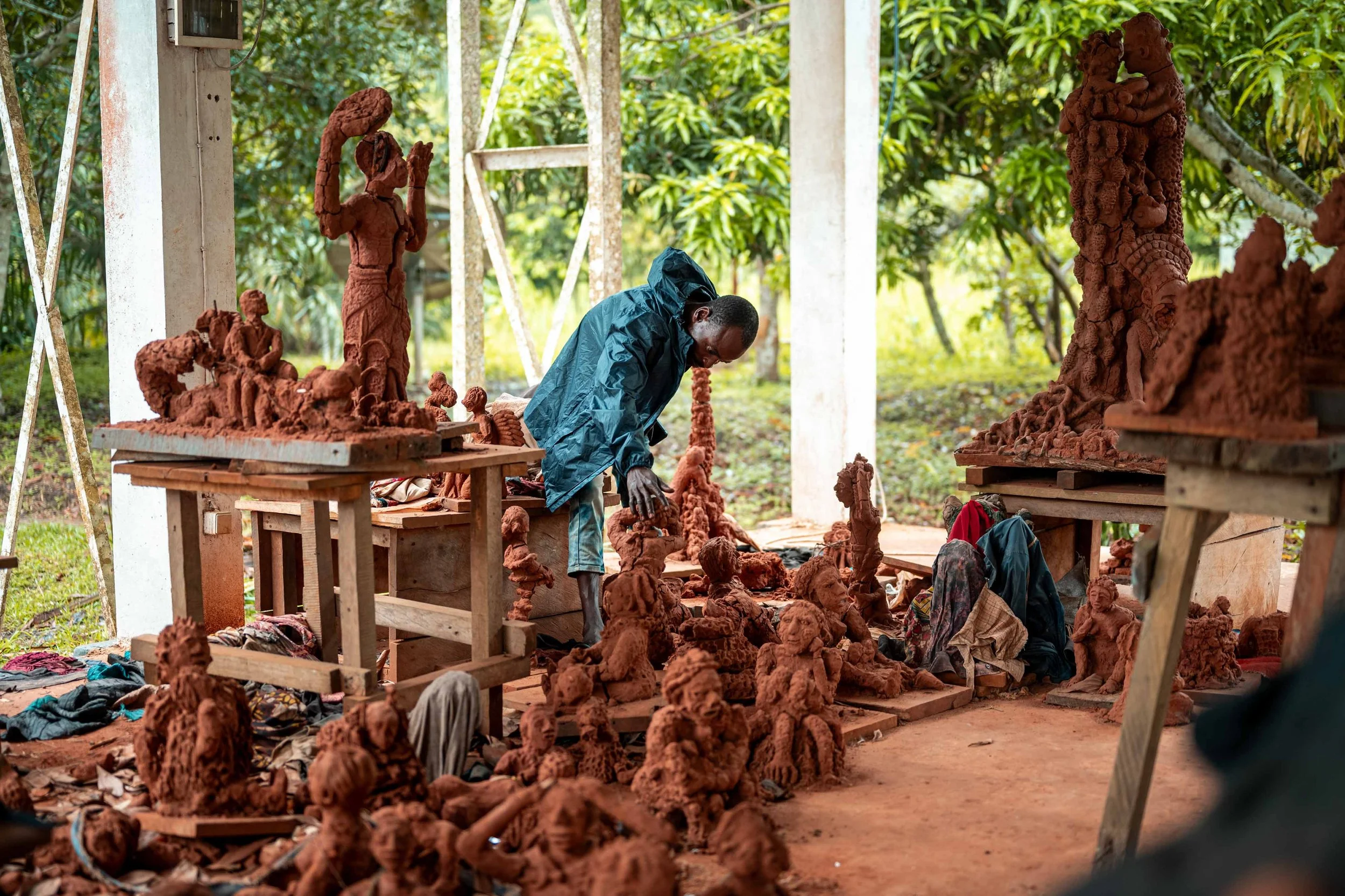
Security guard Paulin Madia inspects artworks in the CATPC workshop. Lusanga, Democratic Republic of the Congo, February 2025.
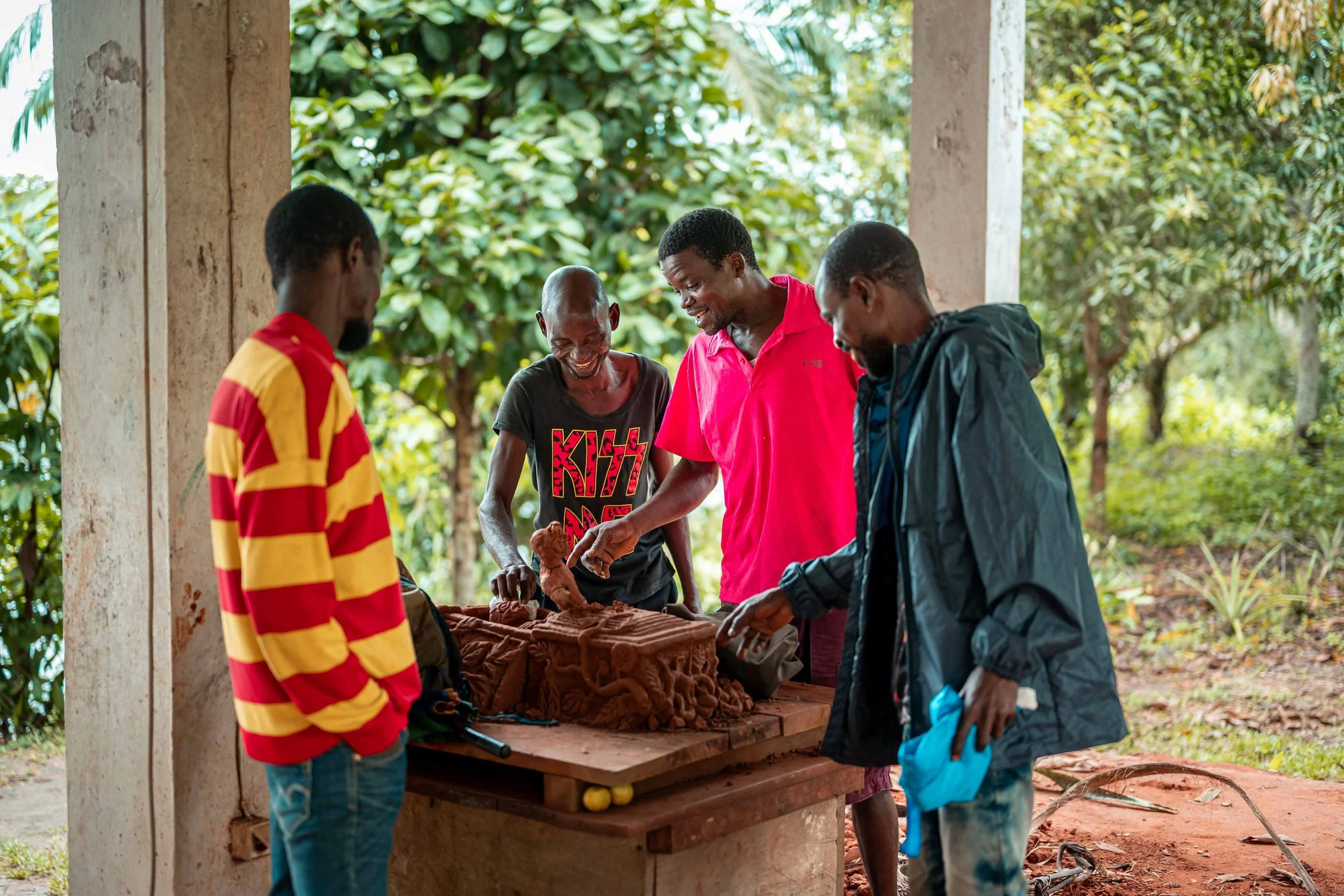
Jean Kawata, 44, discusses his work "Resurrection" with colleagues, a piece symbolizing the abolition of monoculture and the rebirth of polyculture as part of the CATPC project. Lusanga, Democratic Republic of the Congo, February 2025.
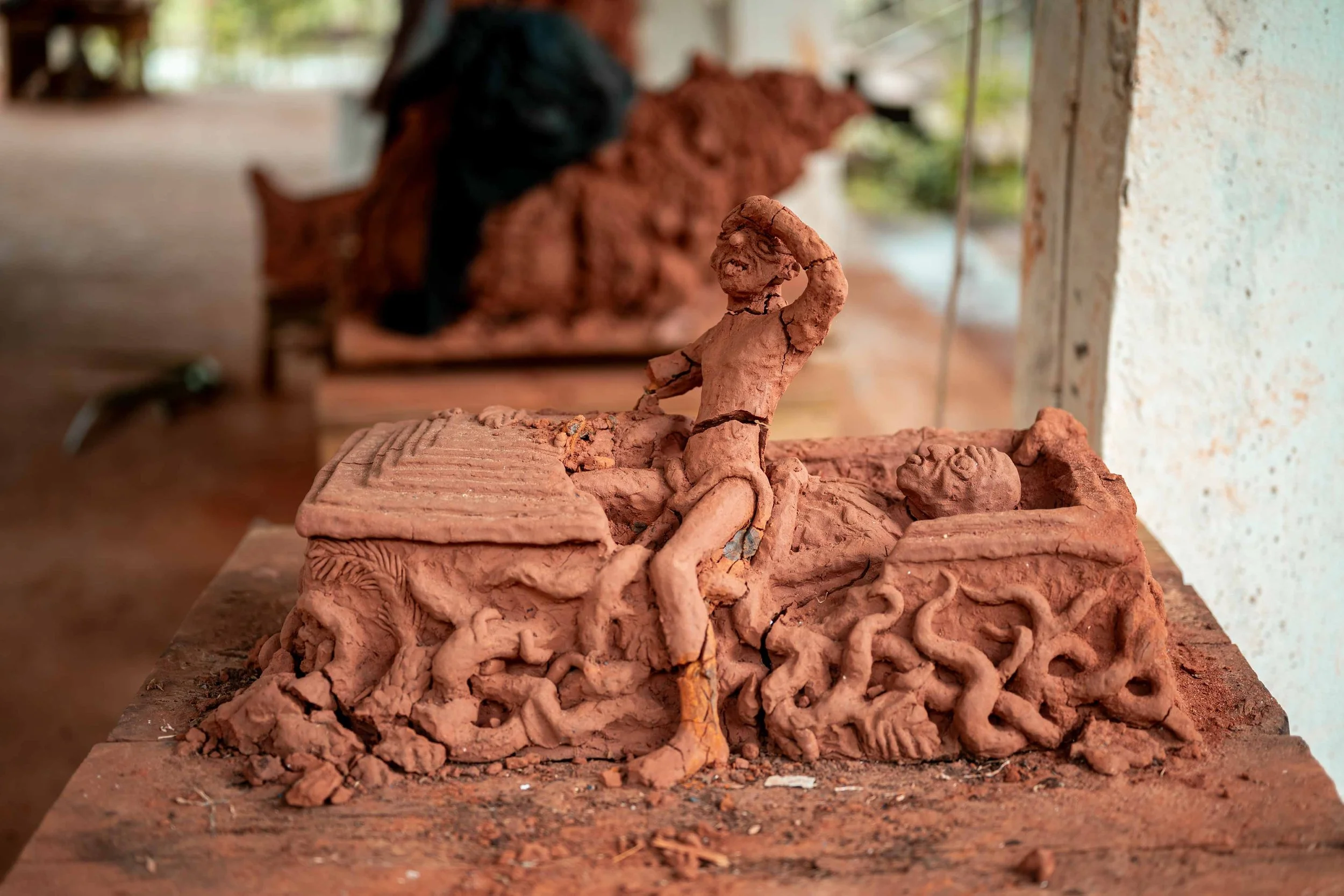
Close-up of the artwork "Resurrection". Lusanga, Democratic Republic of the Congo, February 2025.
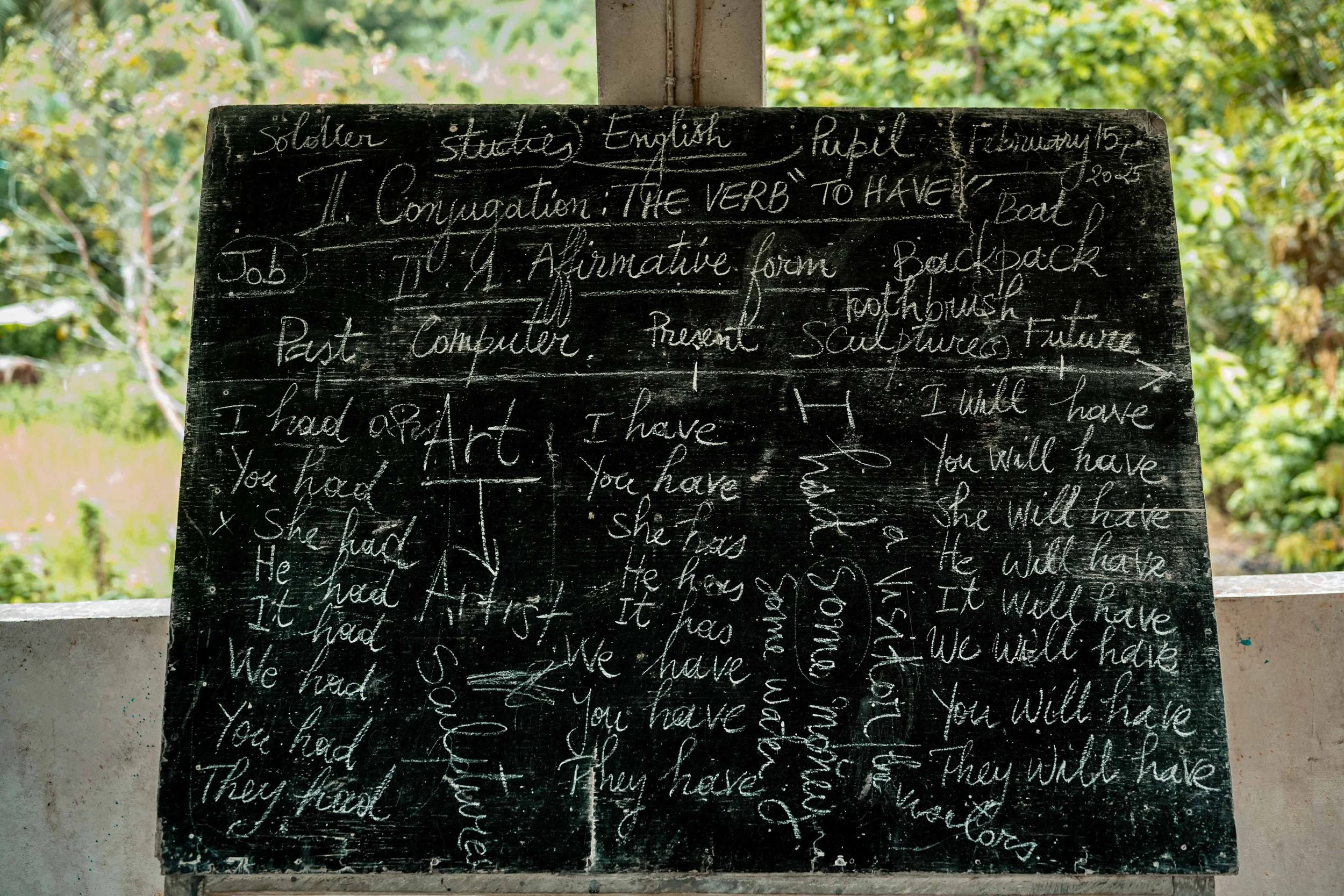
A chalkboard at the Luyalu training center, where artists and young people from the community are trained in various disciplines. Lusanga, Democratic Republic of the Congo, February 2025.
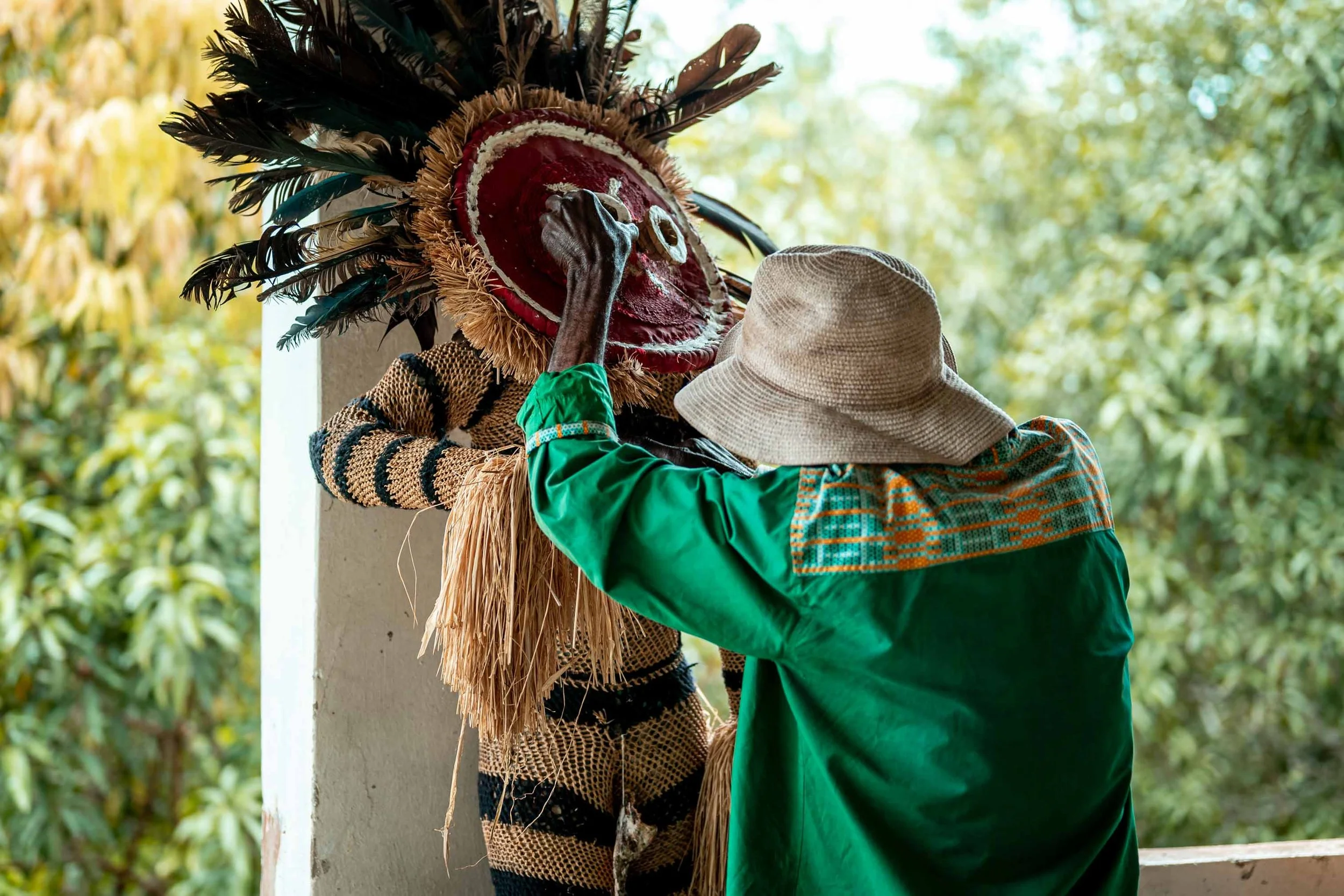
Artist Olela, 73, maintains his work, the Kitenga mask, a mask representing the warrior who watched over groups during initiation ceremonies for young boys transitioning into adulthood. Lusanga, Democratic Republic of the Congo, February 2025.
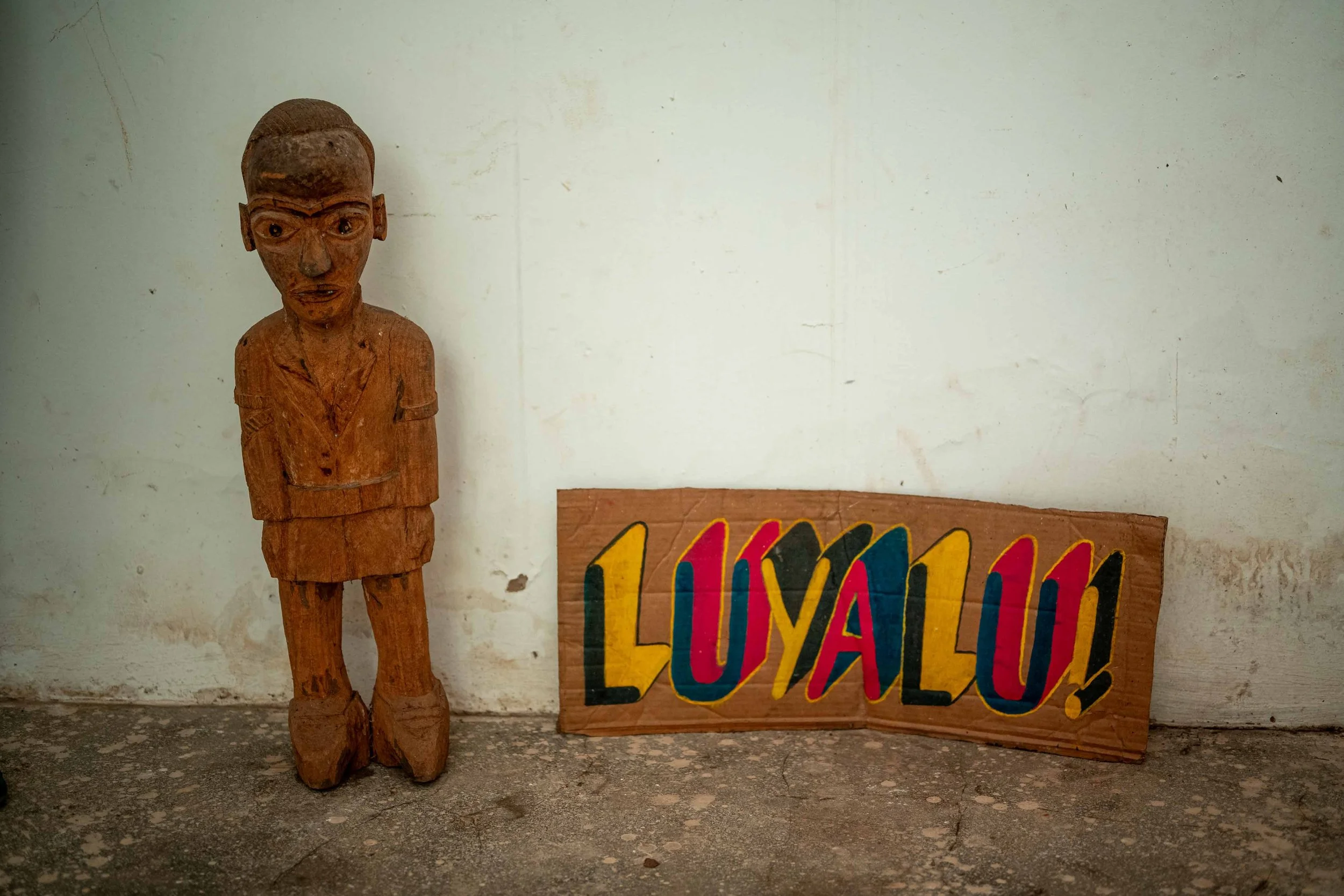
A replica of the artwork "Balot" exhibited at the White Cube Museum. The original, sculpted in 1931 by the Pende ancestors, depicts Belgian colonial officer Maximilien Balot. This piece was created after the Pende rebellion as a response to the abuses of the Belgian colonial authorities. During the 2024 Venice Biennale, the original artwork was exhibited at the White Cube in Lusanga. Democratic Republic of the Congo, February 2025.
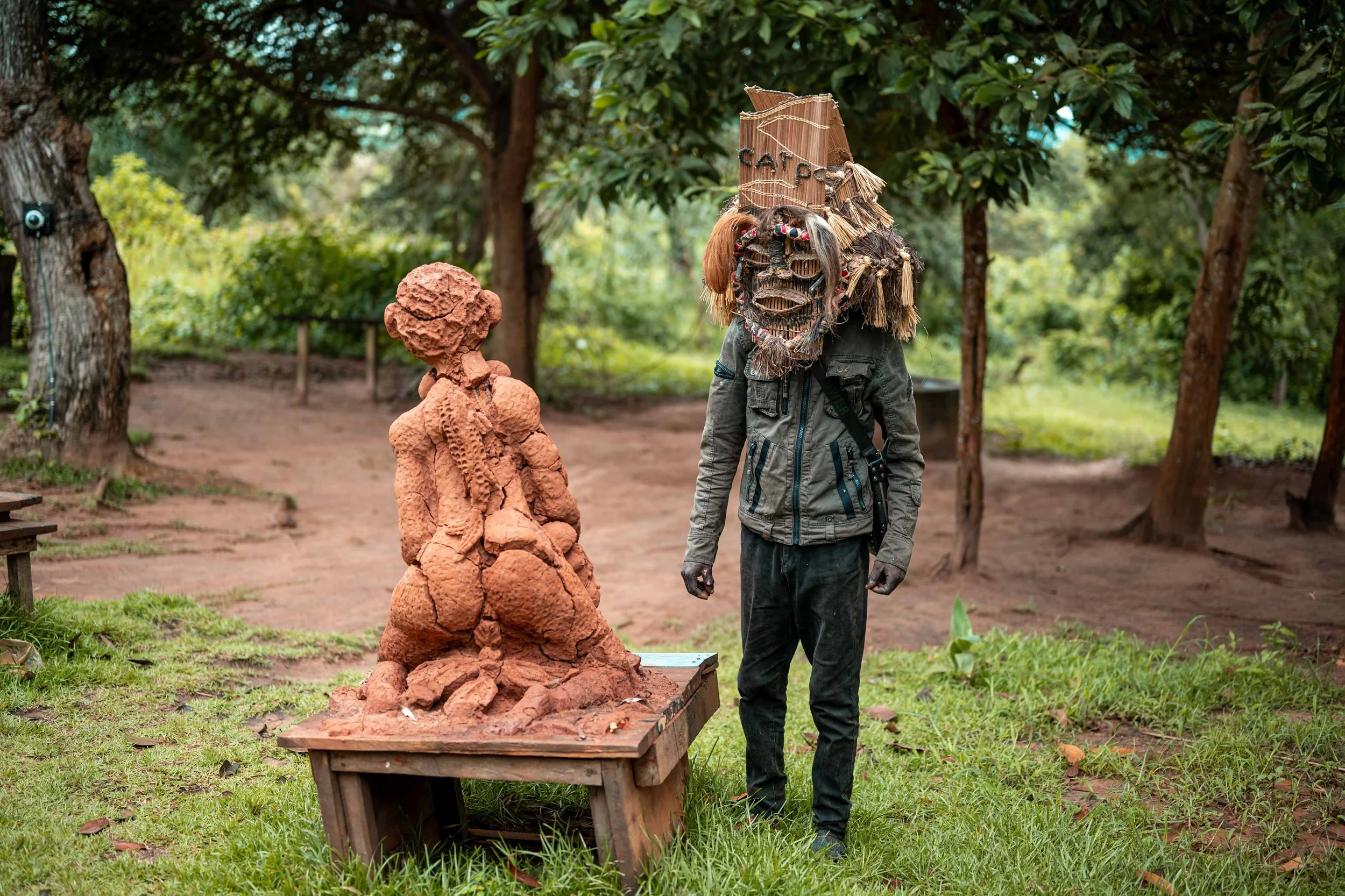
Portrait of Daniel Mufunzi, 44. Lusanga, Democratic Republic of the Congo, February 2025.
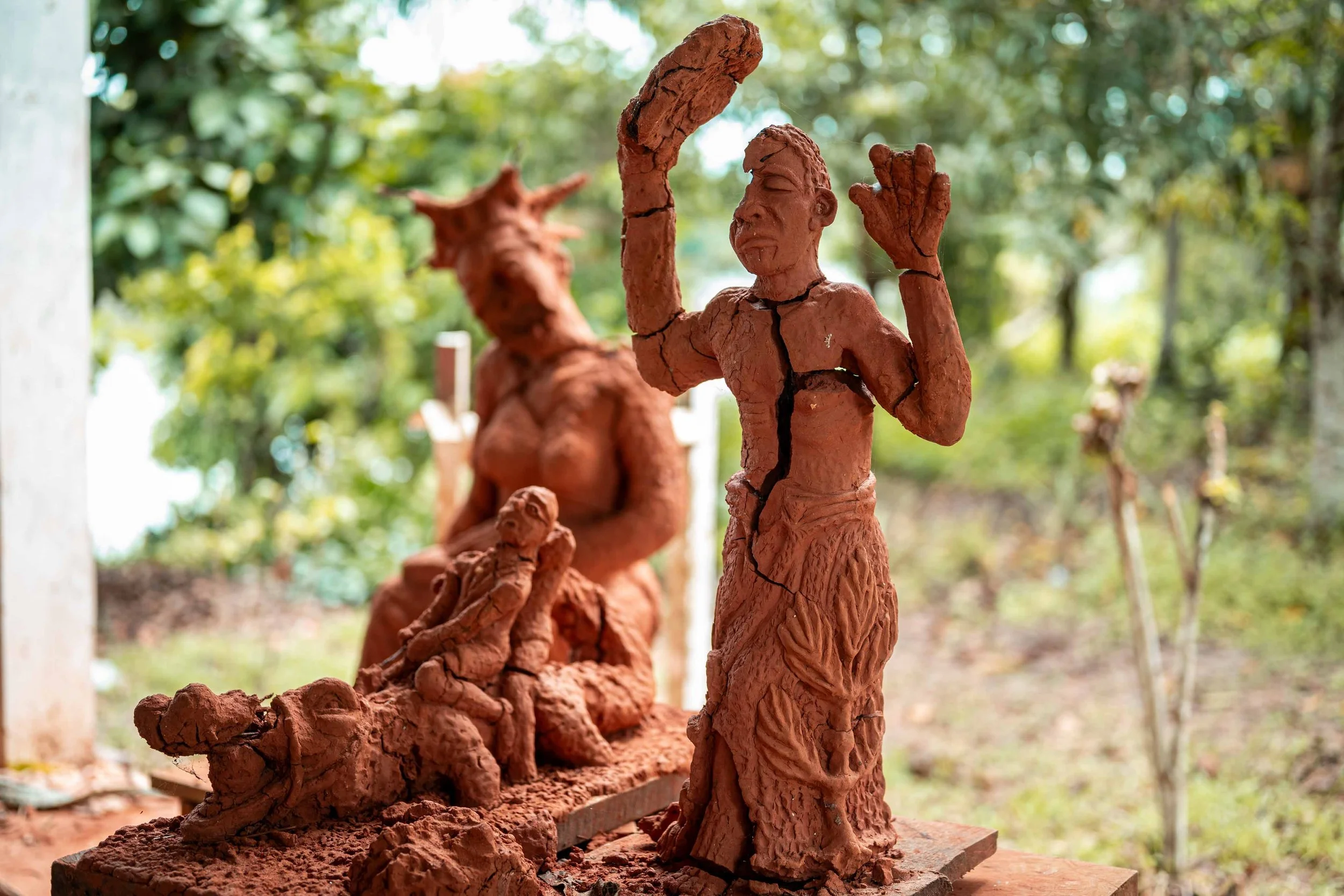
Close-up of an artwork in the CATPC workshop. Lusanga, Democratic Republic of the Congo, February 2025.
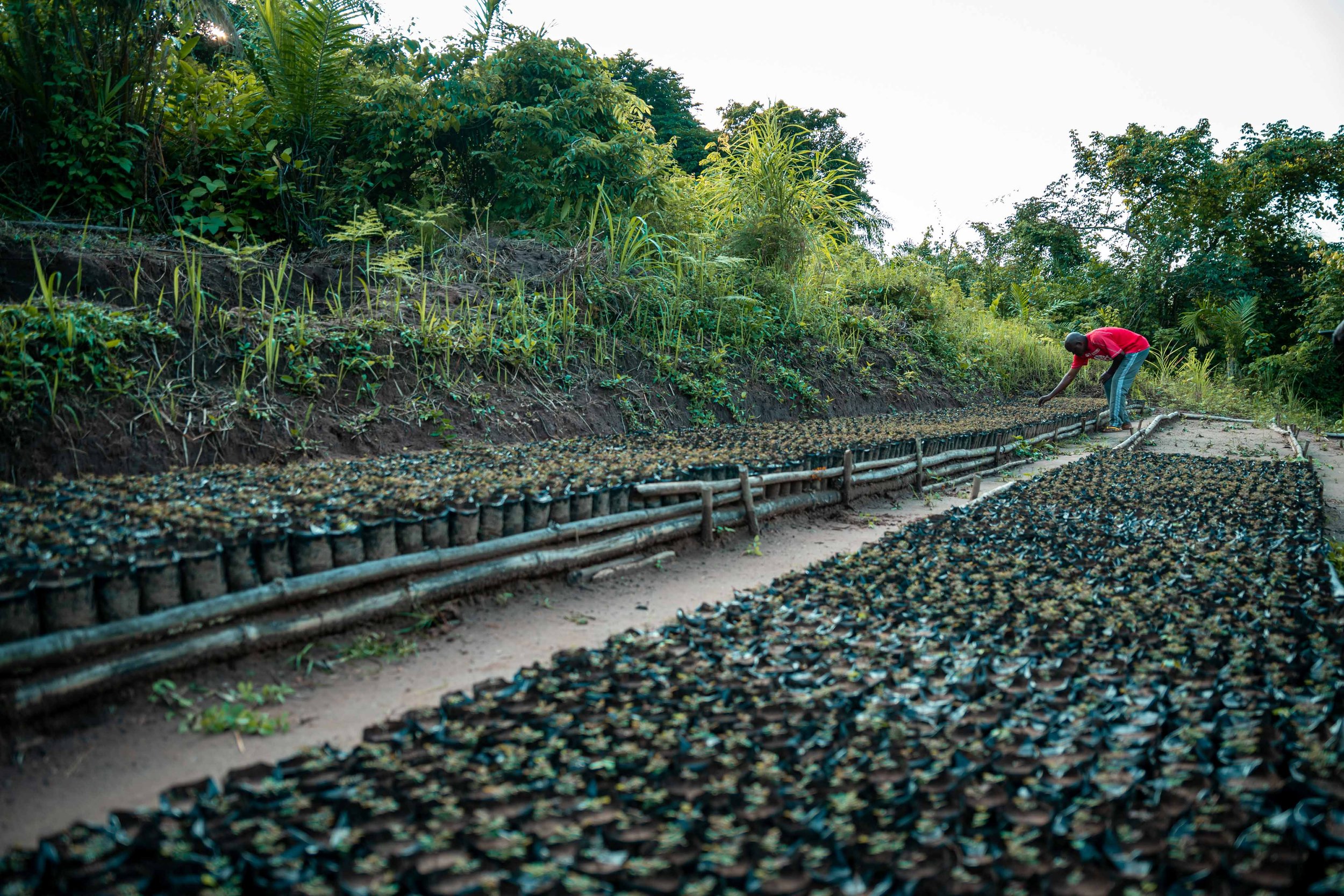
General view of CATPC’s nursery, with site manager Mafuta Tipé actively working in the background. Lusanga, Democratic Republic of the Congo, February 2025.
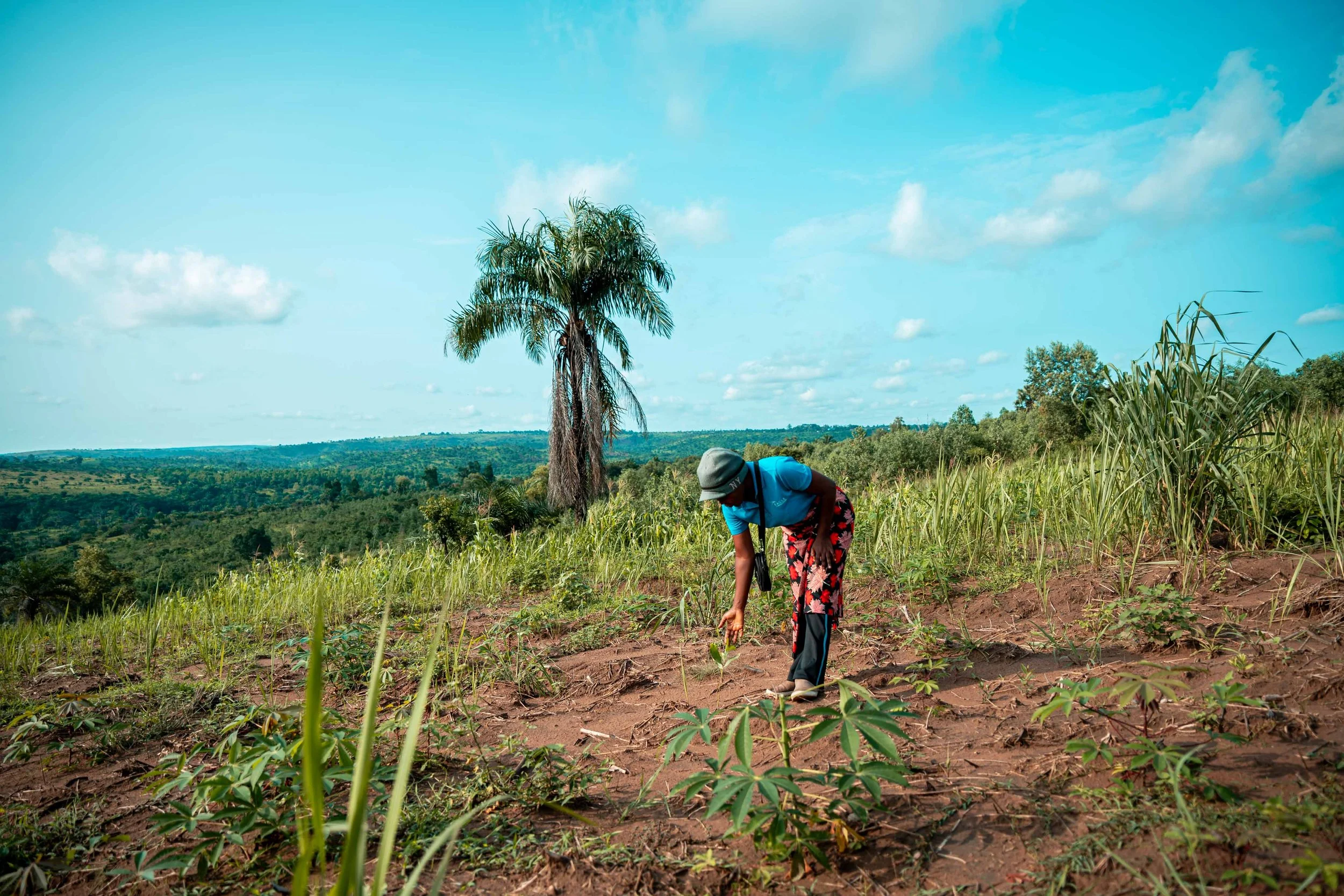
Agronomist Sarah Mapaya in one of the CATPC plantations, where acacia trees and cassava plants are cultivated together. This practice serves a dual purpose: the acacias contribute to ecosystem reforestation, while cassava farming supports both the livelihood of artists and local residents. Lusanga, Democratic Republic of the Congo, February 2025.
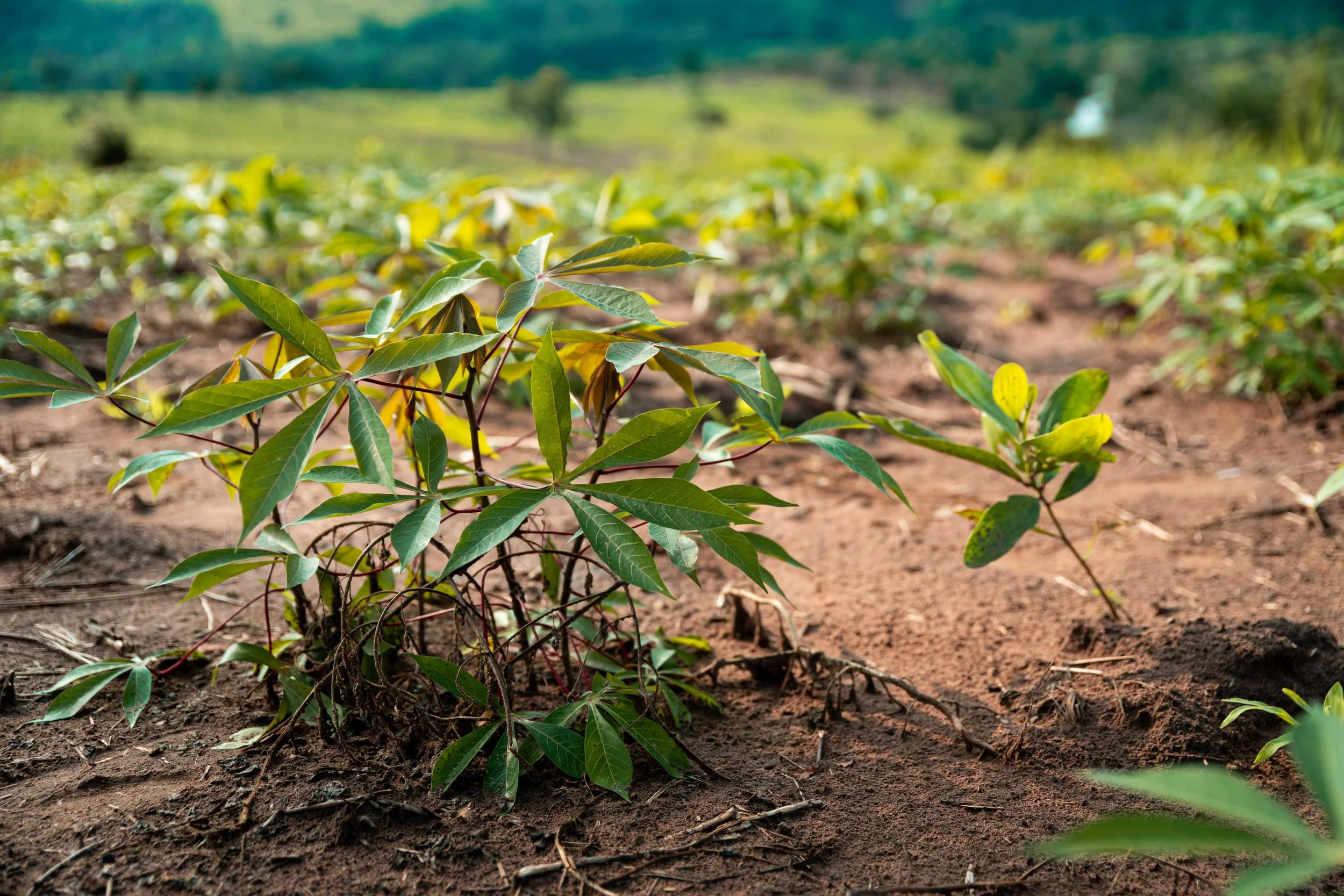
Close-up of young acacia and cassava plants. Lusanga, Democratic Republic of the Congo, February 2025.
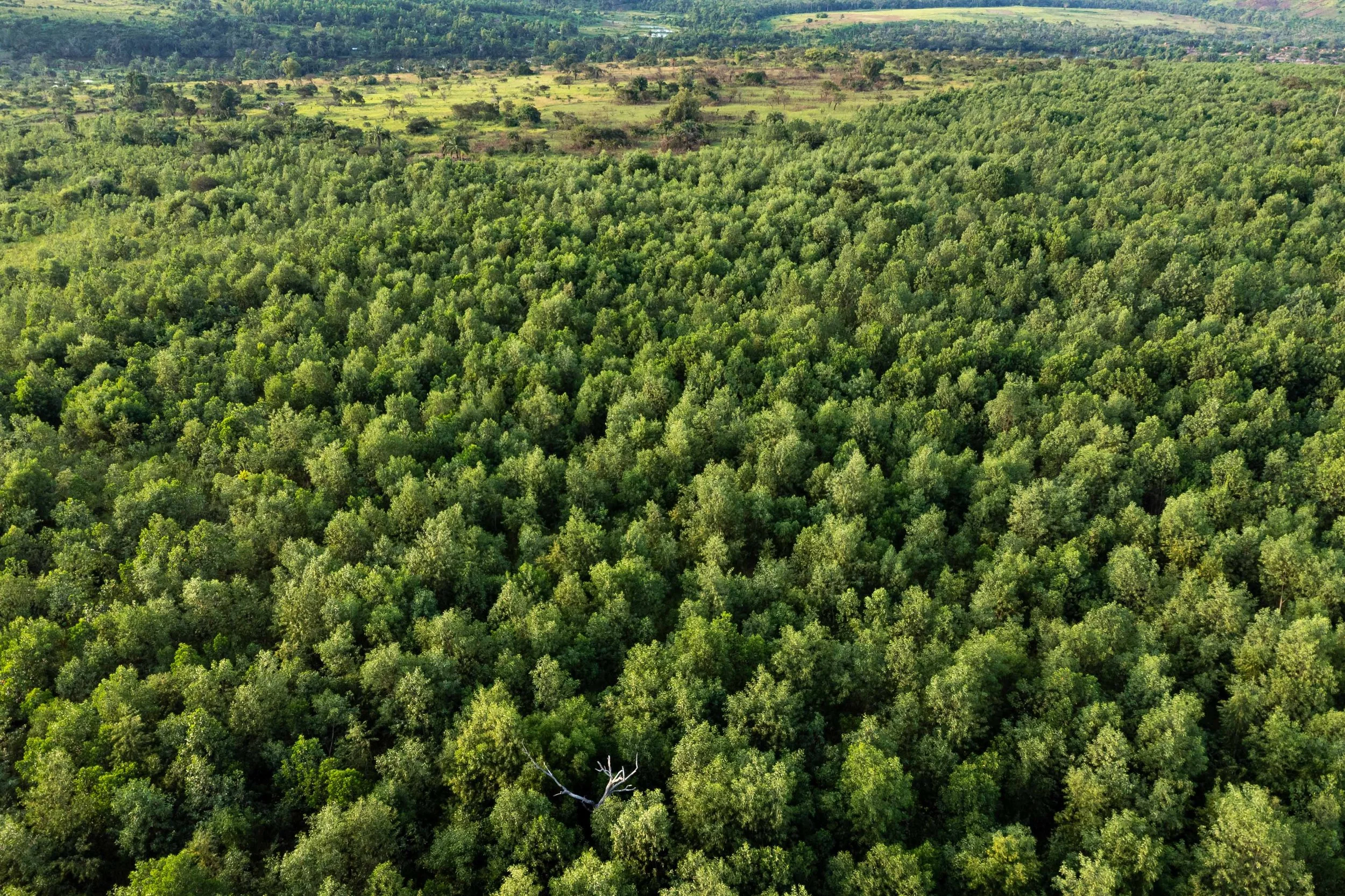
Aerial view of forests regenerated by CATPC. Lusanga, Democratic Republic of the Congo, February 2025.
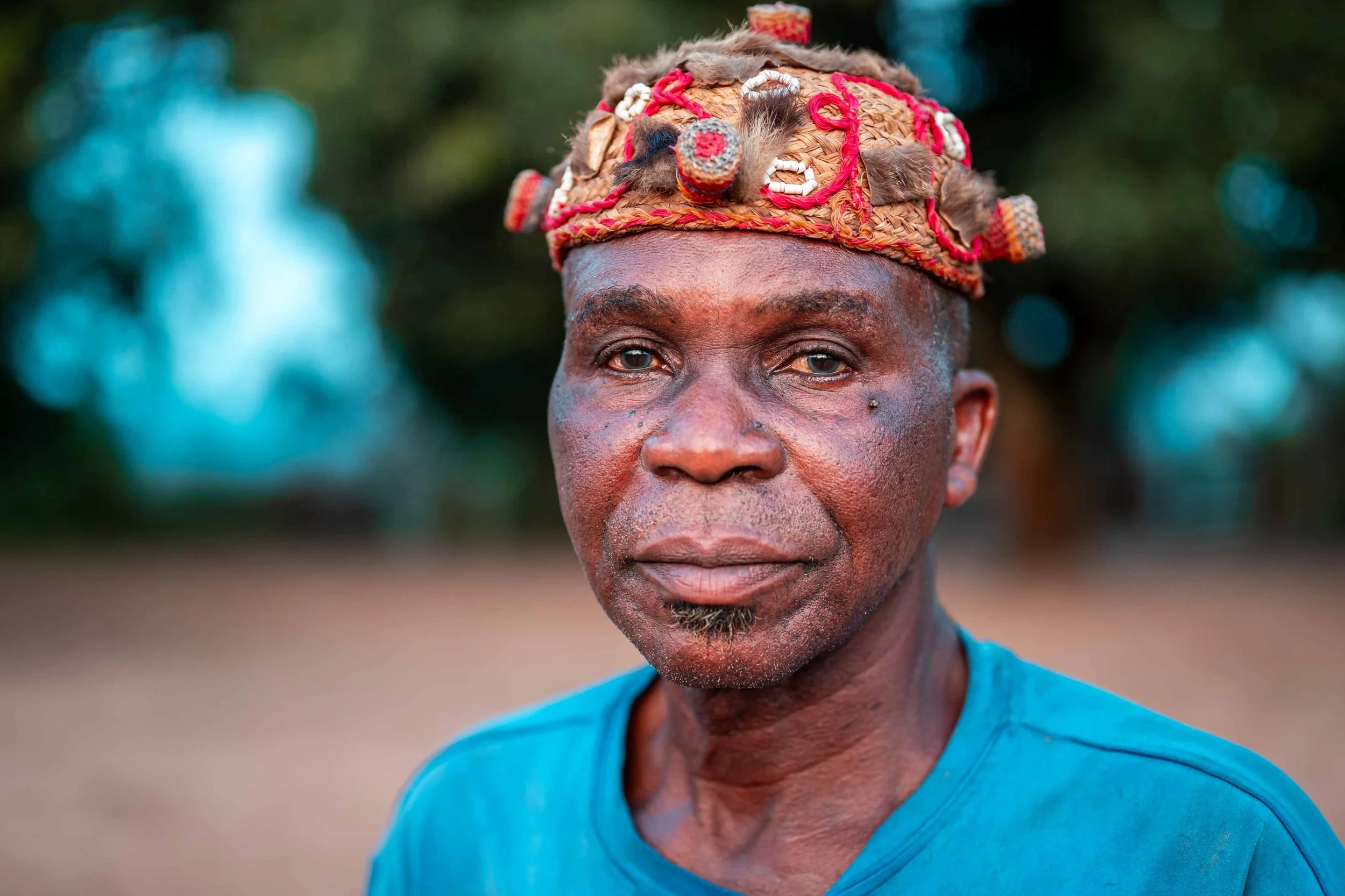
Portrait of Kidashi Kikoni Alphonse, 70, traditional chief of Kianga village, where CATPC acquired land for its project. Lusanga, Democratic Republic of the Congo, February 2025.
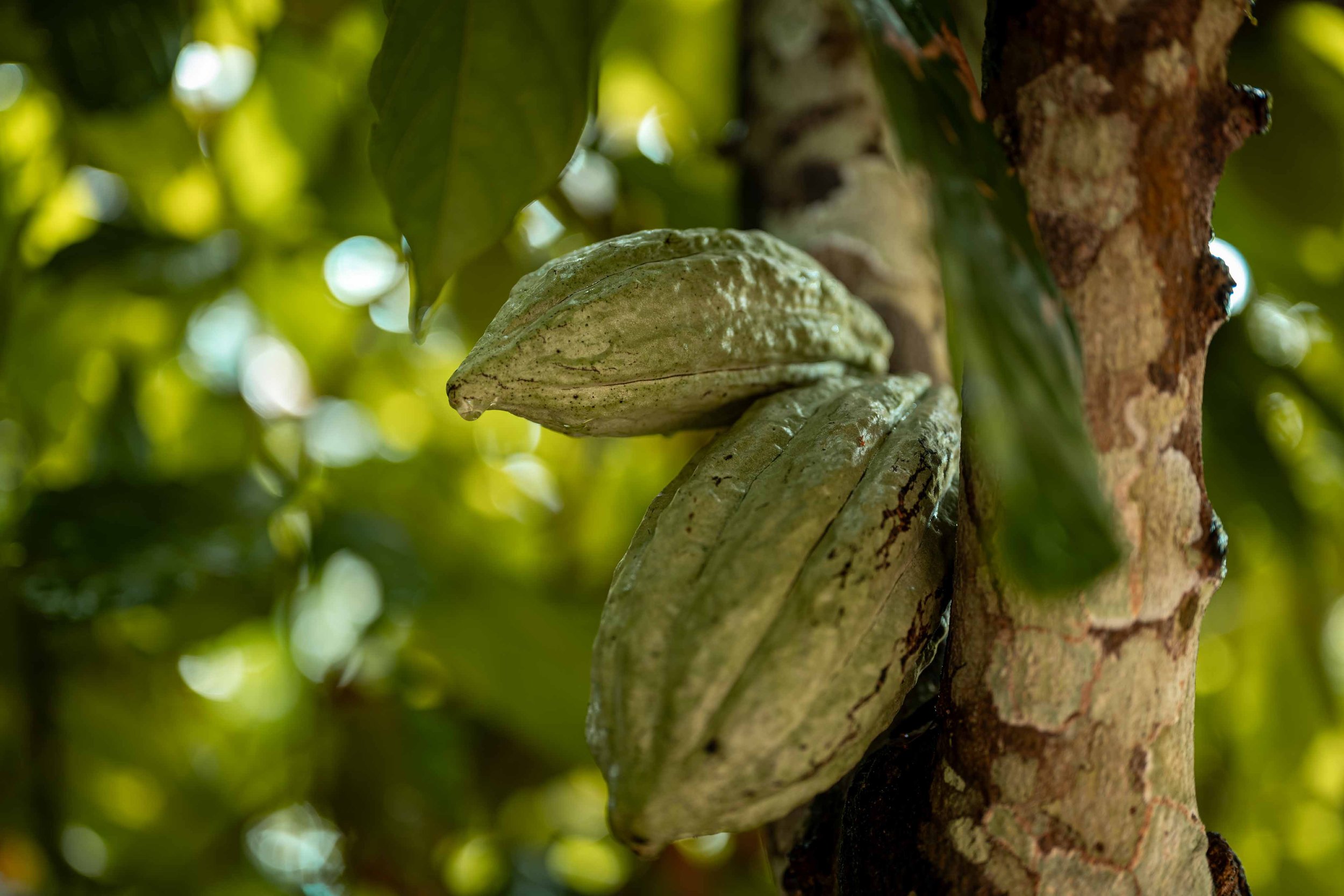
Close-up of cocoa, one of the raw materials used to create replicas of CATPC artists’ works. The process begins with a sculpture made from local clay, which is then digitized in 3D. The models are sent to Amsterdam, where they are cast in chocolate—symbolizing the link between African raw materials and their transformation into luxury products in the West. Lusanga, Democratic Republic of the Congo, February 2025.
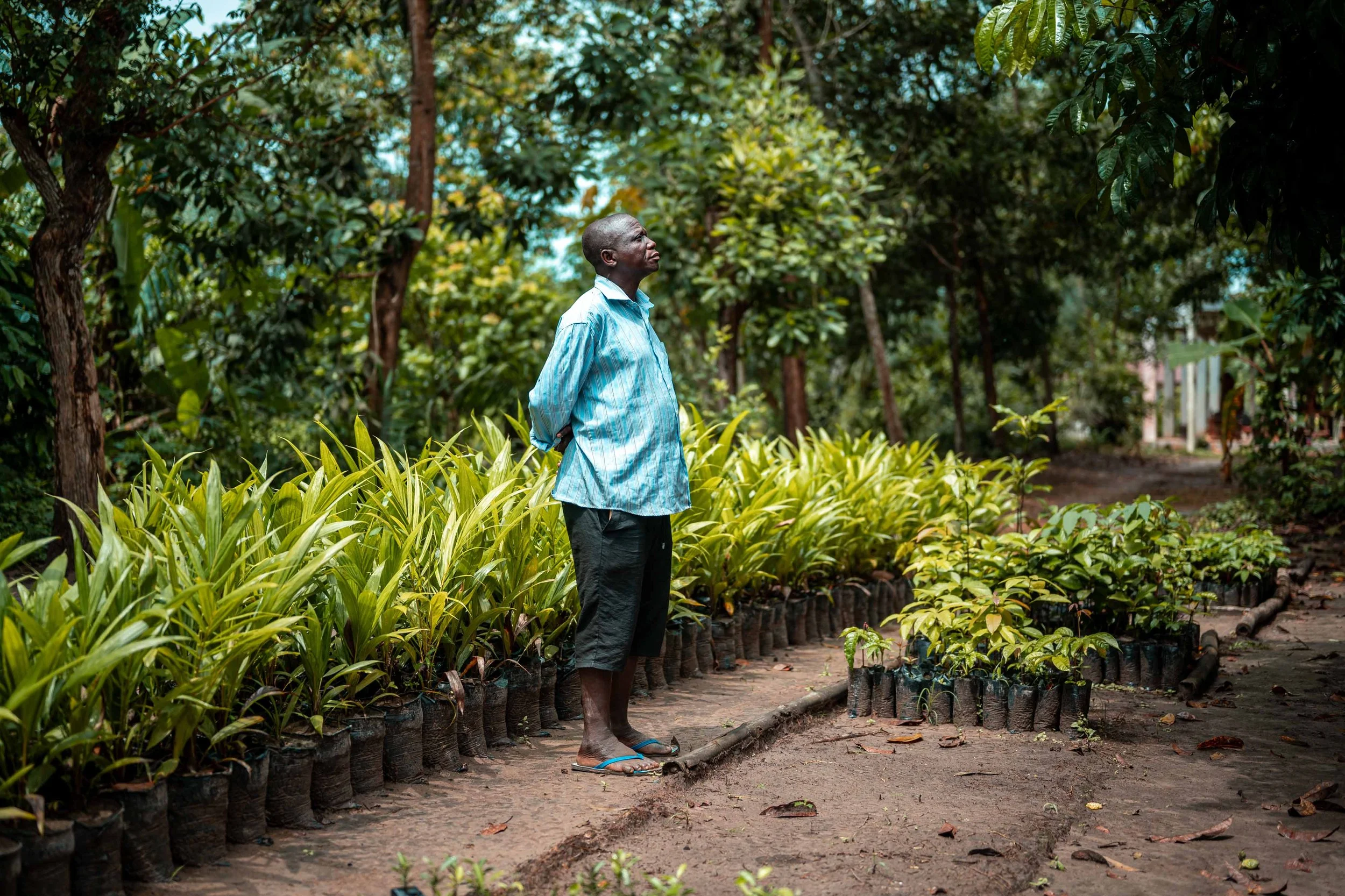
Portrait of agronomist Nzundu Antoine, 38. Lusanga, Democratic Republic of the Congo, February 2025.
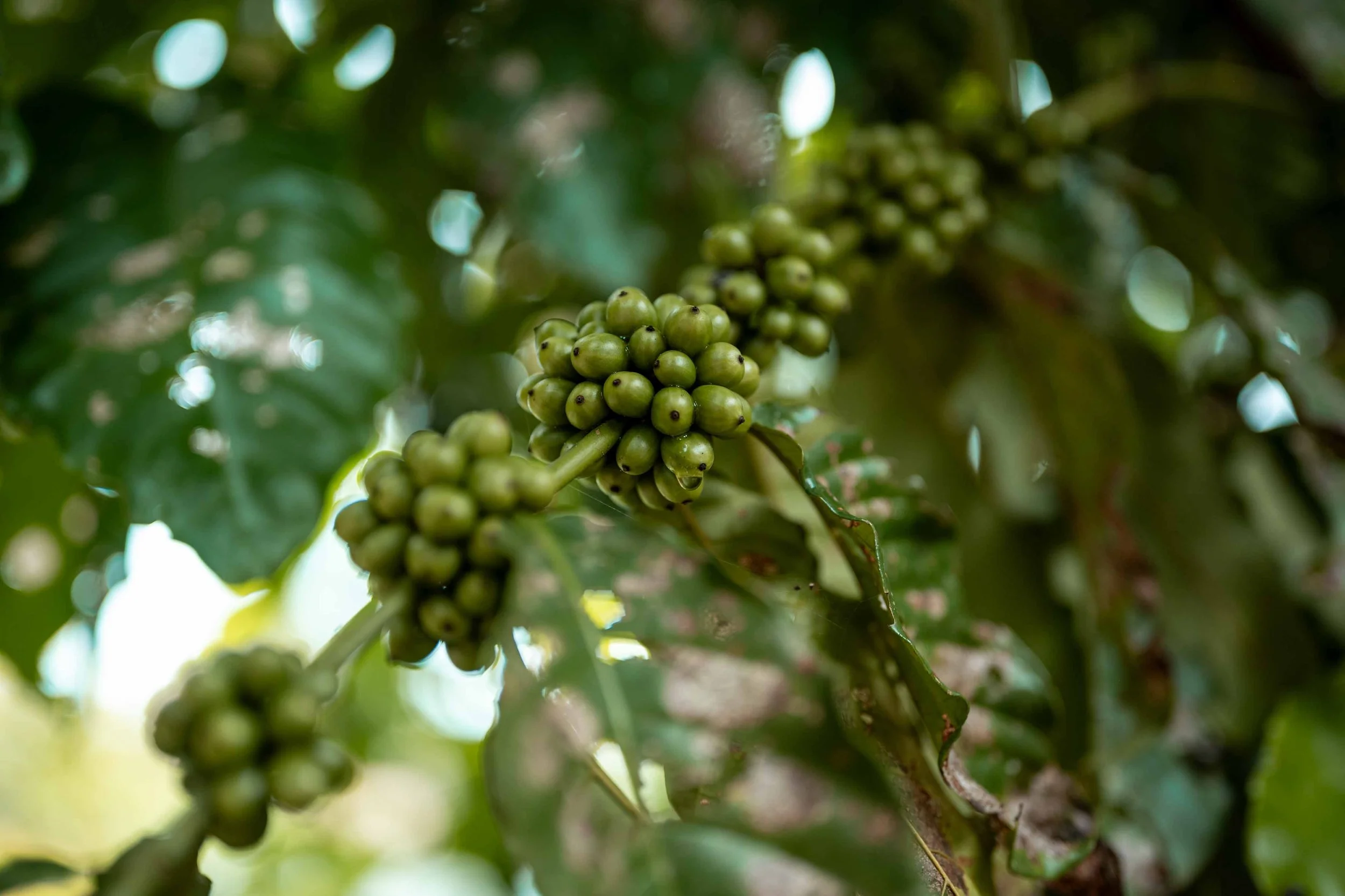
Close-up of coffee plants in the CATPC plantations. Lusanga, Democratic Republic of the Congo, February 2025.
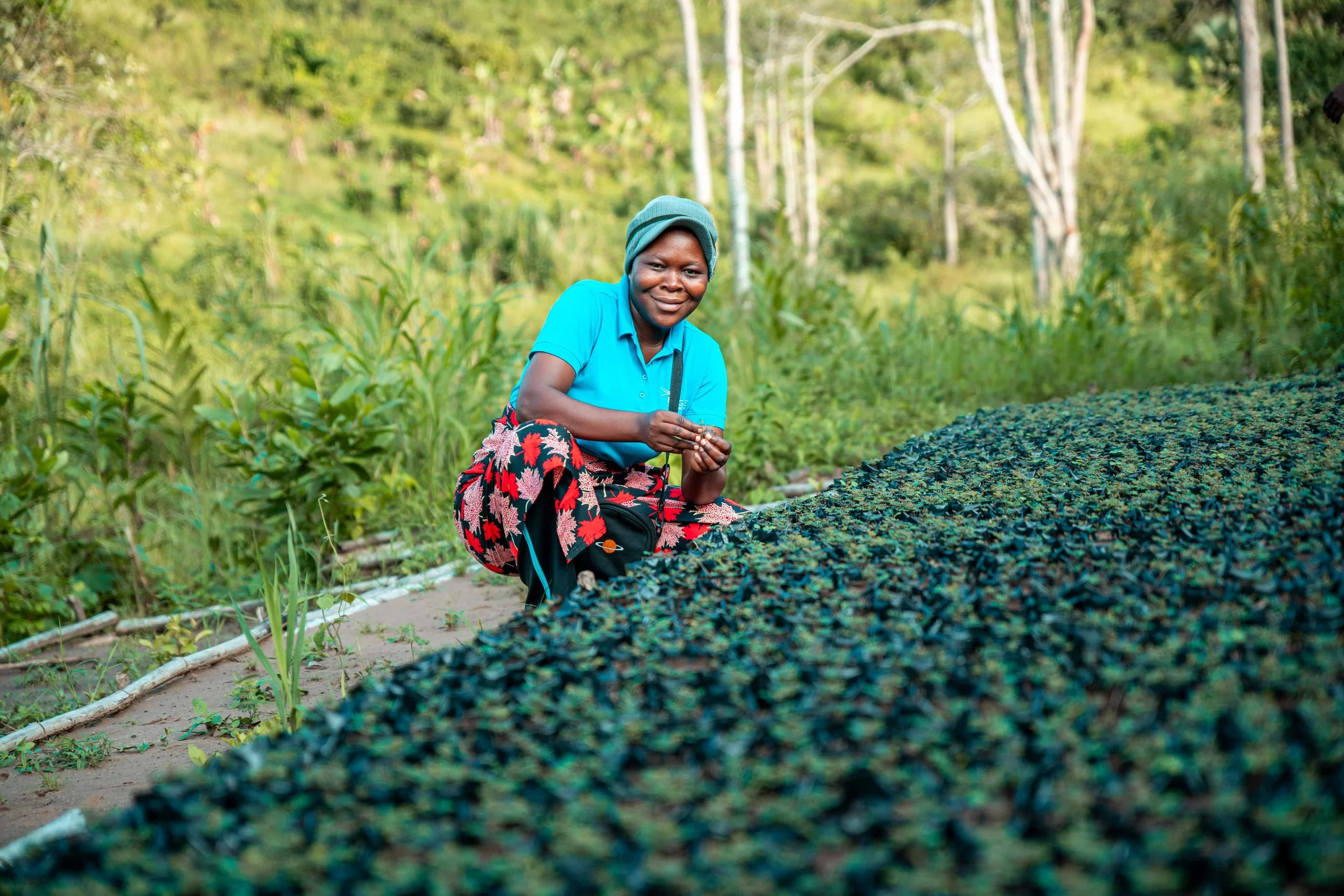
Portrait of agronomist Sarah Mapaya. Lusanga, Democratic Republic of the Congo, February 2025.
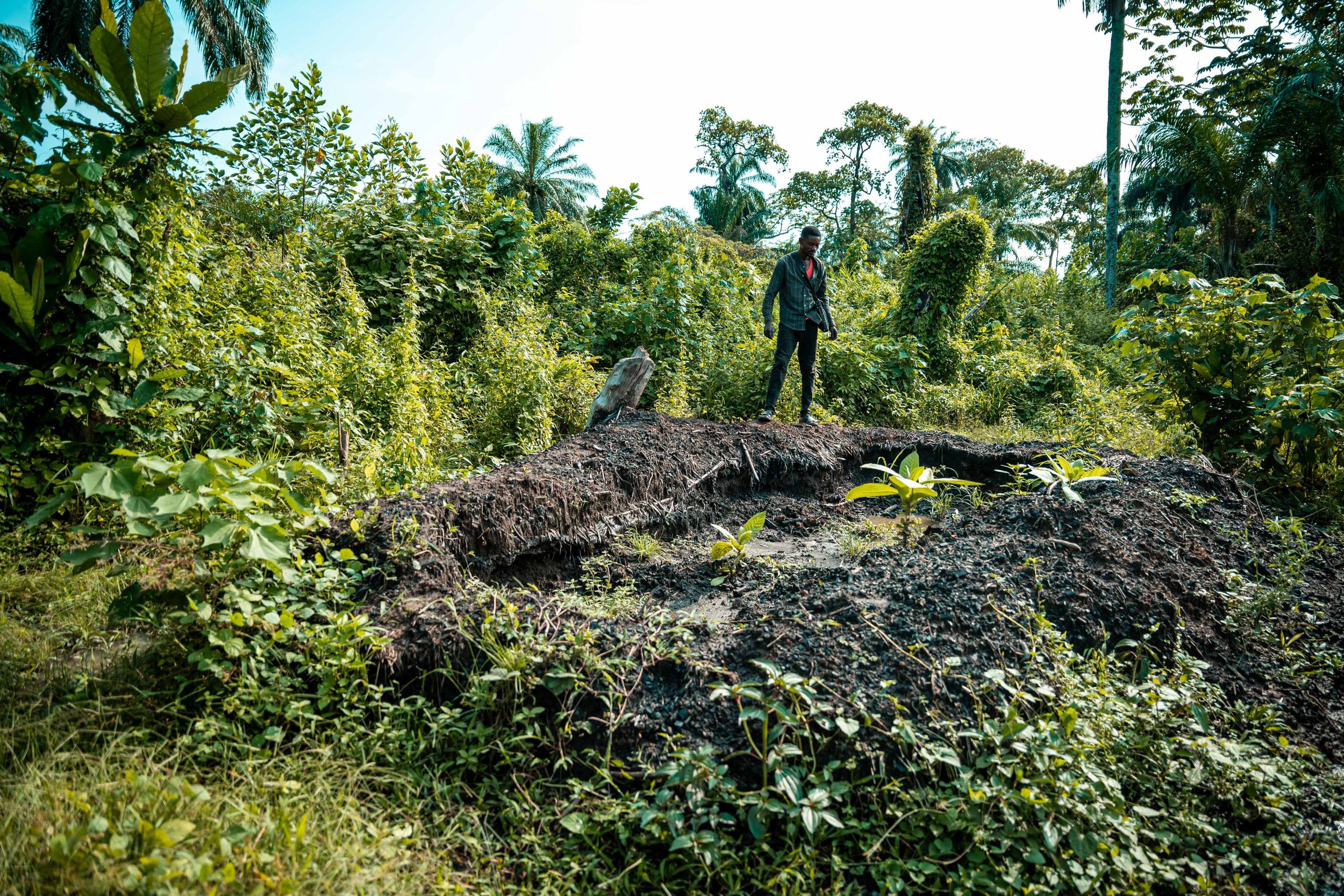
Charcoal production activity within one of the CATPC plantations. Lusanga, Democratic Republic of the Congo, February 2025.
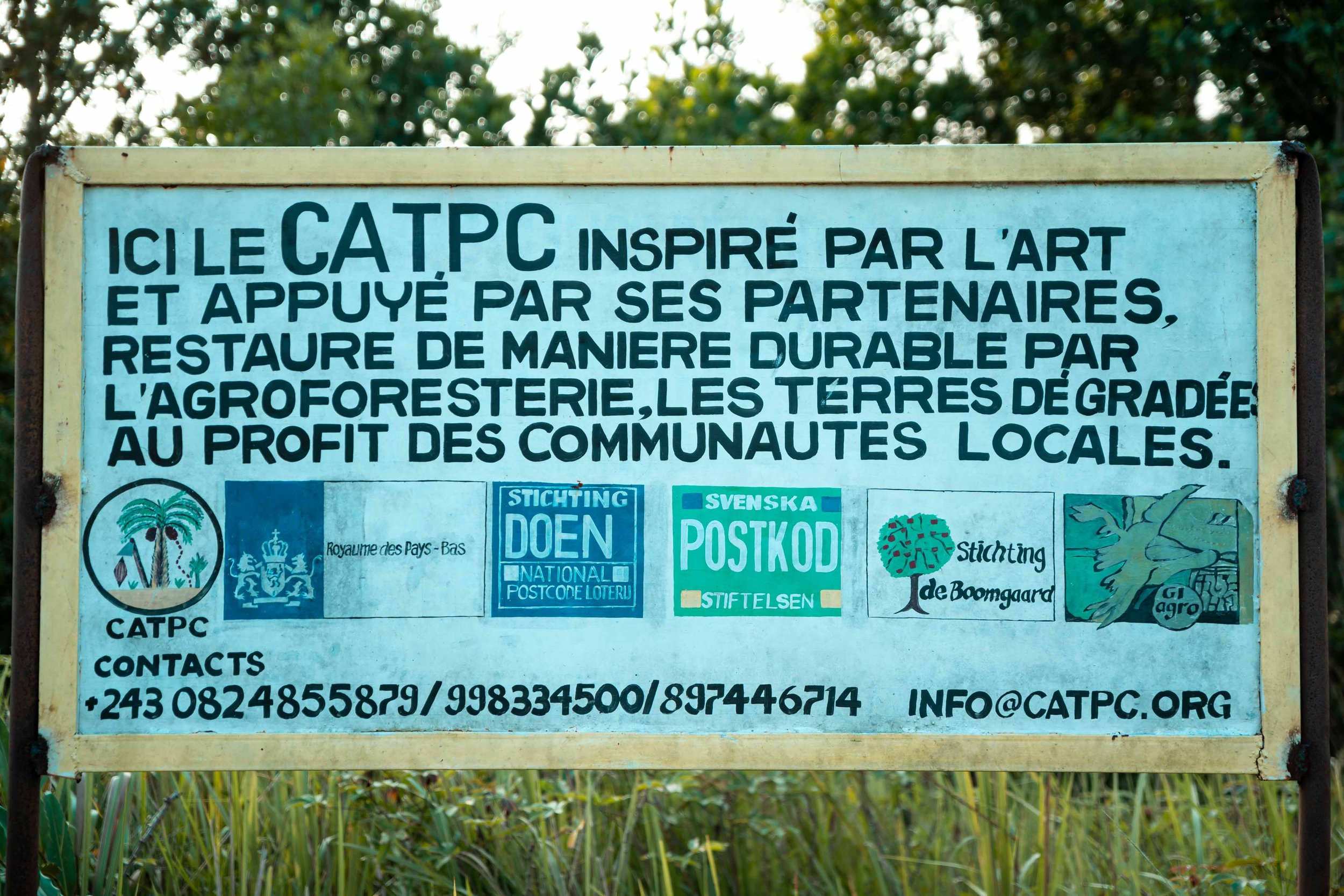
Sign at the CATPC reforestation site, listing the various partners. Lusanga, Democratic Republic of the Congo, February 2025.